.png)
Built in the Dark How Pain Becomes Discipline Purpose and Power
Pain changes the shape of a life. Sometimes it breaks routines, trust, confidence, and the easy story a person once believed about the future. Yet pain can also become the place where a stronger life begins, if it is handled with honesty, patience, and direction.
No one asks for loss, betrayal, failure, loneliness, illness, heartbreak, or fear. Pain is not noble by itself. Suffering does not automatically make anyone wiser. Some people come out of hard seasons bitter, closed off, or exhausted. Others come out steadier. The difference often comes from what they build while no one is watching.
That is what it means to be built in the dark.
The dark is the season where applause disappears. Progress feels invisible. The old version of life no longer works, and the new one has not arrived yet. In that space, pain can become discipline. Discipline can reveal purpose. Purpose can become power.

Pain becomes useful when it is faced honestly
The first instinct after pain is often escape. Stay busy. Numb out. Blame someone. Pretend nothing happened. Smile through it. Build a harder shell.
Those reactions make sense. The mind tries to protect itself from what feels too heavy. Yet pain that gets ignored tends to leak into other places. It shows up as anger over small things, fear of trying again, self-sabotage, or a constant need to prove worth.
Facing pain does not mean replaying it forever. It means telling the truth about what happened and what it did.
That truth may sound simple:
This hurt me.
I lost something real.
I am not the same person I was before.
I need to heal, not just survive.
I have a choice in what I do next.
That kind of honesty is not weakness. It is the starting line.
Pain that stays unnamed becomes a shadow. Pain that gets named becomes material. It can be examined, carried, shaped, and eventually used. A person cannot build with what they refuse to touch.
This is also where balance matters. Pain should not be romanticized. If a wound is deep, support matters. A trusted friend, mentor, counselor, support group, or medical professional can help someone move through a season that feels too heavy to carry alone. Strength is not proven by isolation.
Real strength often begins with one clear sentence: I will not let this pain decide the rest of my life.
Discipline grows when feelings cannot be trusted to lead
Pain can make motivation unreliable. Some days feel sharp. Some days feel empty. Some days bring anger, then sadness, then a strange calm, all before noon. If a person waits to feel ready, they may wait for years.
Discipline becomes the bridge between who someone is in the pain and who they are becoming beyond it.
Discipline is not punishment. It is not self-hatred in a cleaner outfit. True discipline is care with structure. It says, “Even though I hurt, I will still do the next right thing.”
That next right thing may be small:
Get out of bed when staying down would be easier.
Drink water before reaching for another distraction.
Walk for ten minutes.
Write one page.
Apologize without making excuses.
Go to therapy.
Pay the bill.
Apply again.
Train again.
Try again.
Small acts matter because pain tries to convince a person that nothing matters. Discipline argues back through action.
The body learns through repetition. So does identity. A person who keeps one promise to themselves begins to believe they can keep another. The goal is not to become perfect. The goal is to become dependable.
When feelings rise and fall, disciplined action creates a floor beneath the feet.

The dark teaches what comfort often hides
Comfort is good. Safety, rest, peace, and joy are not shallow things. A healthy life needs them. Yet comfort can hide certain truths because it asks very little from the soul.
The dark asks harder questions.
What remains when plans fall apart?
Who stays when approval leaves?
What values still matter when success gets delayed?
What kind of person shows up when no one claps?
Pain strips life down. That stripping can feel cruel, but it can also reveal what is solid.
A person may discover that they built too much identity around being liked. Or winning. Or being needed. Or avoiding conflict. Or never looking weak. Those discoveries sting, yet they can become the beginning of freedom.
The dark teaches through friction. It exposes habits that were built for survival but no longer serve growth.
For example, someone who learned to stay silent to avoid conflict may need to practice speaking plainly. Someone who learned to control everything may need to practice trust. Someone who learned to achieve in order to feel worthy may need to practice rest without guilt.
These lessons do not arrive as slogans. They arrive through real pressure. The missed call. The empty room. The failed attempt. The long night. The morning after.
Discomfort does not automatically create wisdom. Reflection does. Without reflection, pain repeats itself. With reflection, pain becomes a teacher.
A helpful practice is to ask three questions after a hard moment:
What did this reveal about me?
What did this require from me?
What will I practice because of it?
Those questions turn experience into understanding. They help pain become instruction instead of just memory.
Purpose is often found in what pain refuses to destroy
Many people expect purpose to appear like a lightning strike. One perfect calling. One clear plan. One dramatic moment where everything makes sense.
More often, purpose grows from responsibility.
A person survives something and begins to care about others who are still inside it. A person fails and becomes committed to learning deeply. A person loses direction and starts building a life with better roots. A person sees what pain can do and decides to become someone who brings steadiness into chaotic places.
Purpose does not erase grief. It gives grief somewhere meaningful to go.
That does not mean every painful event “happened for a reason.” Some things are simply wrong, unfair, and heartbreaking. No one needs to pretend otherwise. Purpose is not always found in the event itself. Sometimes purpose is found in the response.
There is a difference.
Pain says, “This happened to me.”
Purpose says, “This will not be the only thing that defines me.”
Purpose may begin quietly. It may look like rebuilding a family. Getting sober. Becoming healthier. Mentoring someone. Creating art. Starting over after failure. Learning a skill. Breaking a generational pattern. Telling the truth. Choosing not to pass the pain on.
When purpose grows from pain, it often carries depth. It has weight because it has been tested. It does not need constant praise because it was formed in private.
That kind of purpose becomes steady. It gives a reason to keep showing up when the easy reasons disappear.
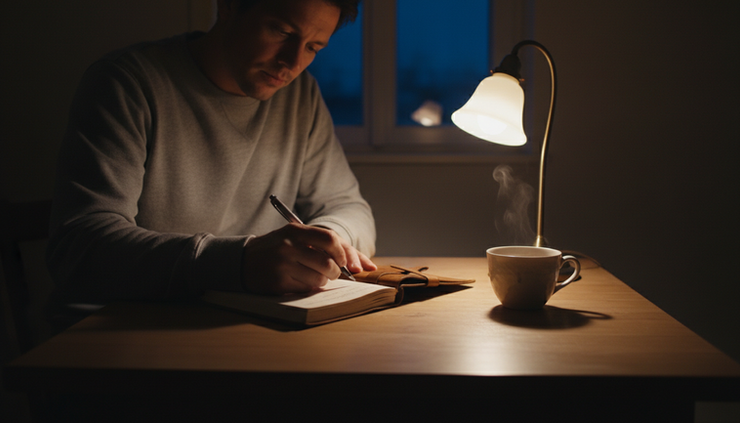
Power is the ability to choose your response
Power is often confused with control. Control tries to force life to obey. Real power begins when a person understands what they can and cannot command.
No one can control every loss, rejection, diagnosis, betrayal, delay, or disappointment. No one can control how other people behave. No one can rewrite the past by thinking about it harder.
But a person can choose a response.
That choice may be small, but it is not weak. It is one of the most powerful human abilities.
A person can choose to pause before reacting.
A person can choose to train while still grieving.
A person can choose to forgive without pretending the wound was minor.
A person can choose boundaries.
A person can choose patience.
A person can choose a better pattern than the one they inherited.
This is where power becomes quiet. It does not always look impressive from the outside. Sometimes power looks like not sending the message. Not returning to the habit. Not quitting after one bad day. Not using pain as permission to harm others.
Pain may explain behavior, but it does not have to excuse it. Power accepts that truth without shame.
The strongest people are not untouched. They are not numb. They are not always loud. Many of them are simply practiced. They have spent enough time in the dark to know that a hard feeling is not the same as a final command.
They can feel fear and still move.
They can feel grief and still love.
They can feel anger and still choose restraint.
They can feel doubt and still keep faith with the next step.
That is power.
The process is slow because the roots are deep
Fast change is attractive. Deep change is different.
Pain can make a person desperate for a new identity. New body. New mindset. New career. New circle. New life. Those changes may be needed, but lasting growth takes more than a burst of emotion.
A tree does not survive storms because its leaves look strong. It survives because its roots have gone deep where no one can see.
The same is true for people.
Private habits become public strength. Quiet decisions become visible character. Repeated discipline becomes trust. Over time, the person who kept showing up in the dark begins to move differently in the light.
The work may include:
Learning to regulate emotions instead of being ruled by them
Building routines that support sleep, movement, food, and focus
Choosing relationships that do not feed old wounds
Practicing honesty when hiding feels safer
Taking responsibility without carrying false blame
Returning to meaningful work even when confidence is low
None of this is glamorous. Most of it is boring. That is part of why it works.
Pain often creates intensity. Discipline creates consistency. Purpose creates direction. Power creates choice. Together, they form a life that can bend without breaking.
Do not confuse hardness with healing
There is a version of strength that is only armor. It looks tough, but it is built from fear. It refuses help. It mocks tenderness. It calls avoidance peace and calls numbness control.
That kind of hardness may protect someone for a while, but it also blocks joy. It keeps love at a distance. It turns every disagreement into a threat. It makes rest feel unsafe.
Healing creates a different kind of strength.
Healed strength can be firm without being cruel. It can set boundaries without needing revenge. It can remember the past without living there. It can ask for help and still stand tall.
The goal is not to become untouched by life. The goal is to become whole enough that pain no longer drives every decision.
A disciplined life still has room for softness. Purpose still has room for laughter. Power still has room for humility. The dark may build strength, but the point is not to stay there forever.
The point is to learn what the dark can teach, then carry that lesson into the light.

What to carry forward
Pain is not the whole story. It may be a chapter, a turning point, or a scar that never fully disappears, but it does not get to hold the pen forever.
The question is not whether hard seasons will come. They will. The question is what gets built there.
Let pain tell the truth, but do not let it write the future alone. Let discipline give shape to the days when motivation fades. Let purpose rise from what still matters after everything unnecessary falls away. Let power begin with the next choice.
Some people are built in comfort. Others are built in the dark.
The ones built in the dark often learn something rare: even when life takes away the easy path, it cannot take away the decision to rise, rebuild, and become someone stronger than the pain that tried to define them.


Comments